

Biochar keeps boosting yields in Season 6
For three years, MASH Makes has been running a multi-season field trial to measure the effect of a single biochar application on crop yields. Now, Season 6 results show that even after multiple growing seasons (and through unpredictable weather!) biochar is still helping crops perform better.
The trial alternates between soybean and chickpea crops each season. In Season 6, soybean plots treated with biochar produced up to 65 percent more yield than untreated plots. However, due to unusual weather, we couldn’t harvest the full plots. Instead, we estimated yield by sampling 25 healthy plants per plot. These results should be seen as indicative, not conclusive. Still, they align with a consistent pattern across all seasons.
What we’ve learned from six seasons
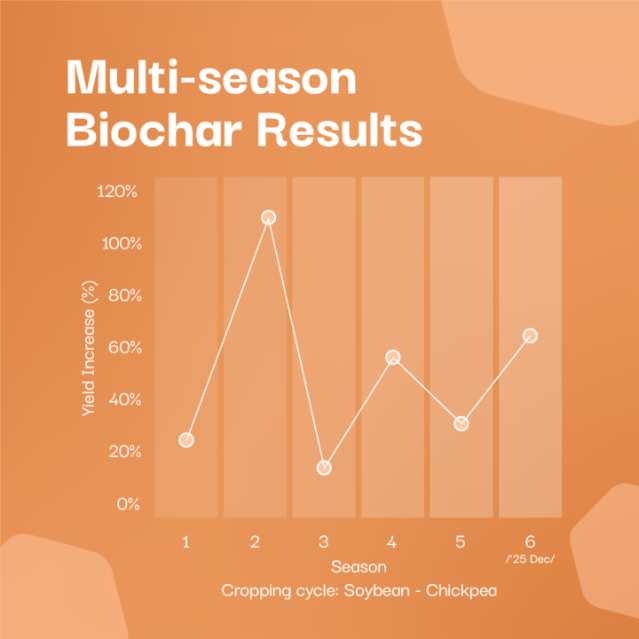
Our field trials now cover a range of seasons and weather conditions. The long-term patterns are clear:
- Biochar improves yields during climate stress. In drought years (Seasons 2 and 3), treated plots clearly outperformed controls.
- The effect is consistent even in typical years. Biochar’s benefits aren’t limited to extreme weather events.
- Higher application rates perform better. Plots treated with 4 tonnes per acre consistently outperformed those with 2 tonnes per acre and the control.
Fieldwork in real conditions is complex, and comparisons between seasons are not always straightforward. But after six seasons across multiple crops and climates, the message is consistent: biochar improves yields and helps crops cope with variable conditions.
Why this matters
These field trials are one part of a much larger effort. MASH Makes biochar is showing real-world potential as a soil amendment and a tool for climate resilience, carbon removal, and more reliable farming systems.
In the coming year, we’ll continue building the evidence through ongoing trials, new crops, and better measurement. At the same time, we’re working with NGOs and agricultural partners in India to share knowledge, ensure proper use, and make biochar accessible where it’s needed most.
If you're a farmer, agricultural organisation, or sustainability partner interested in practical climate solutions, get in touch.
More news
Biochar trial shows gains in Season 7
Shipping fuel transition gets real
Biochar Research Update: January 2026
GET INVOLVED
